You are using an outdated browser. Please upgrade your browser or use Google Chrome to improve your experience. Close
For The Natural Advantage

From dry, sandy paddocks to wet weather and changing feed quality, Australia's varied conditions can bring different challenges for horse owners. Knowing what to look out for and how to manage your horse's feeding routine can help you make informed choices all year round.
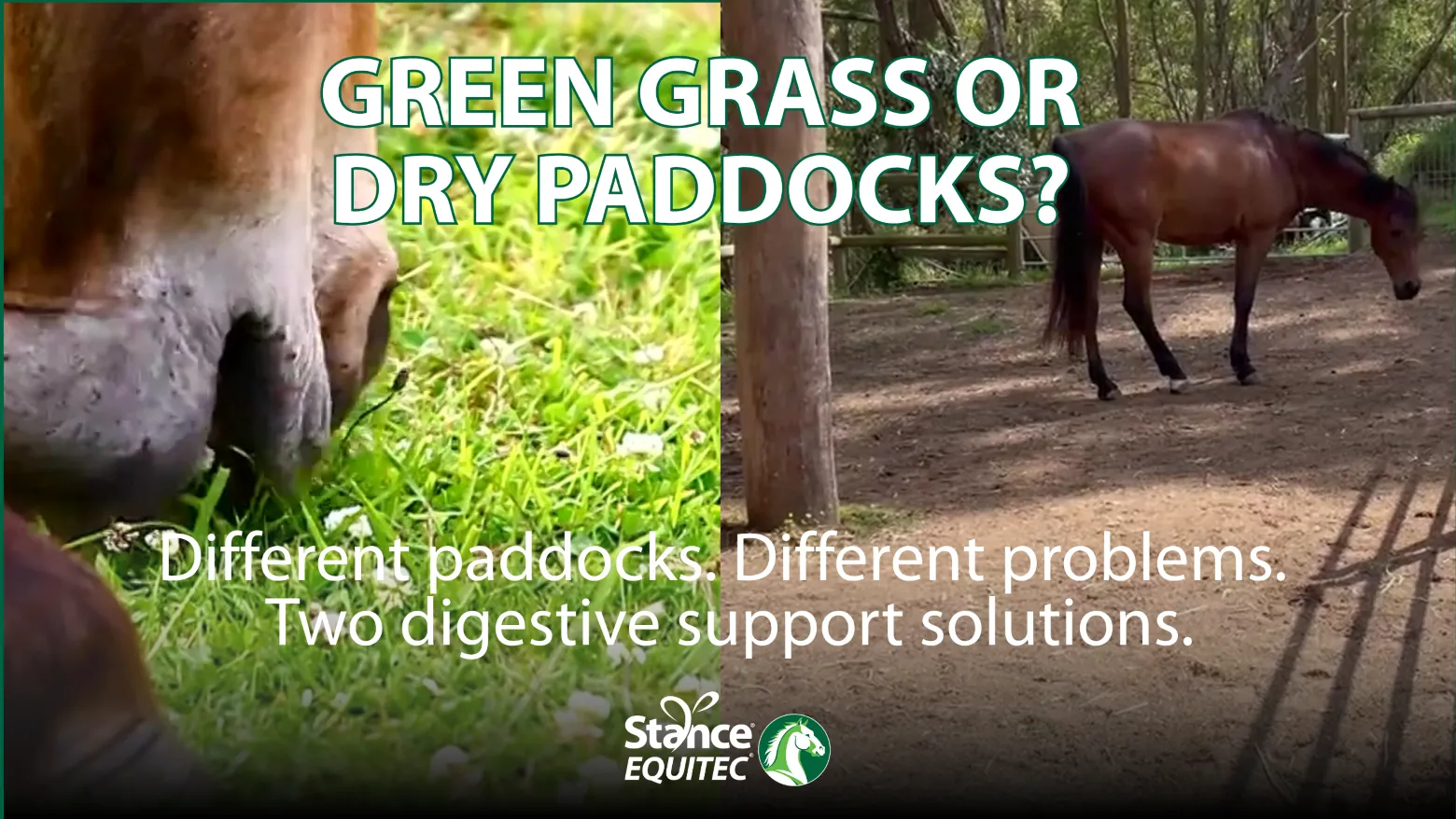
Across Australia, some horse owners are dealing with dry paddocks, limited grass and sandy conditions, while others are experiencing heavy rain, humidity and rapid pasture growth. Although these conditions look very different, both can bring challenges for your horse's feeding and digestive health.
Whether your horse is enjoying lush spring pasture or searching for the last blades of grass in a dry paddock, support their digestive health with Stance Equitec.
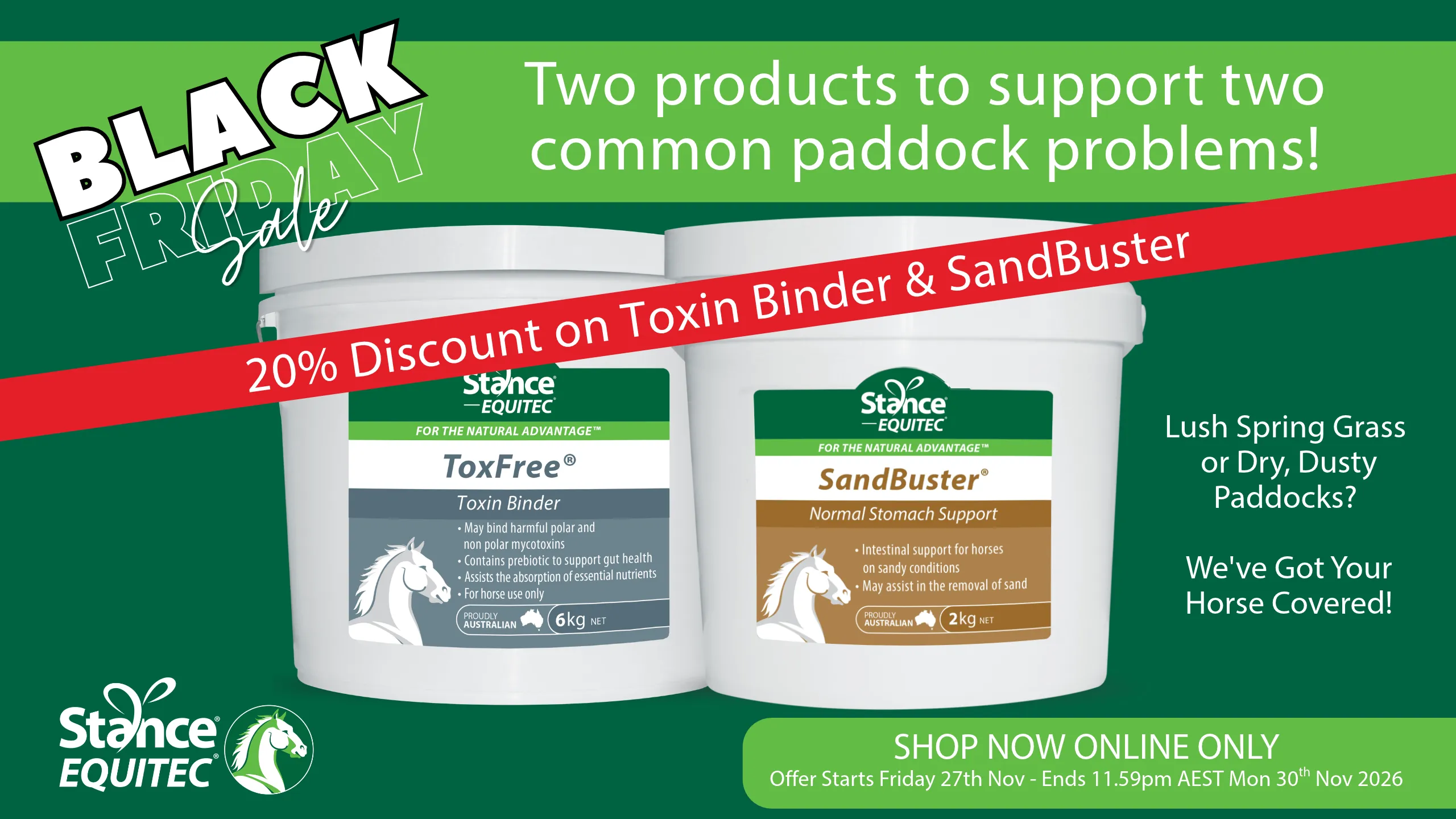
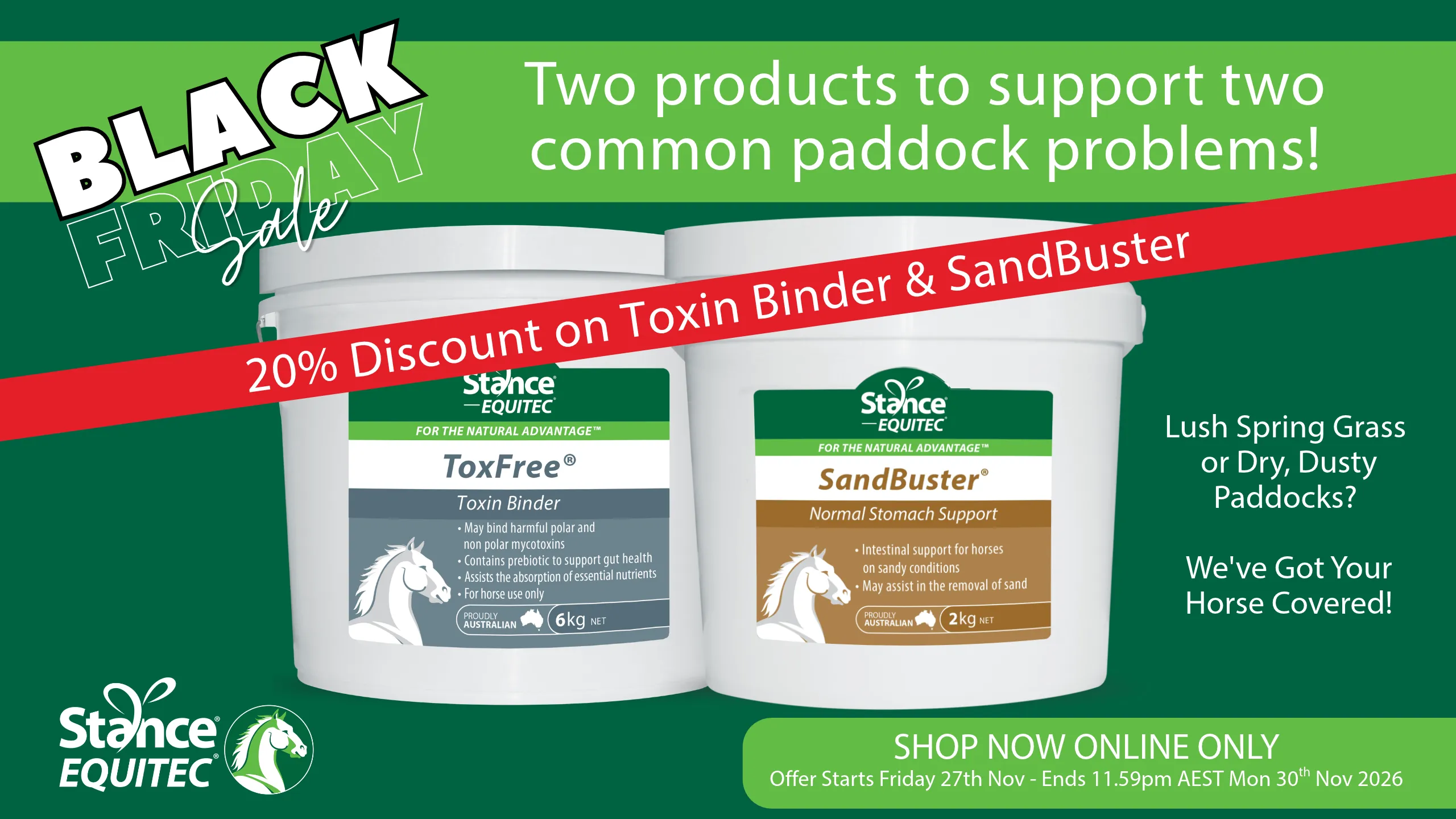
Shop our Black Friday 20% DISCOUNT now! USE CODE: BLACKFRIDAY26
Starts Friday 27th Nov 2026 Ends 11.59pm AEST Monday 30th Nov 2026
Shop Toxin BinderShop Sandbuster
Here are three things worth keeping in mind as the season changes
1. Dry conditions: Be mindful of sand ingestion
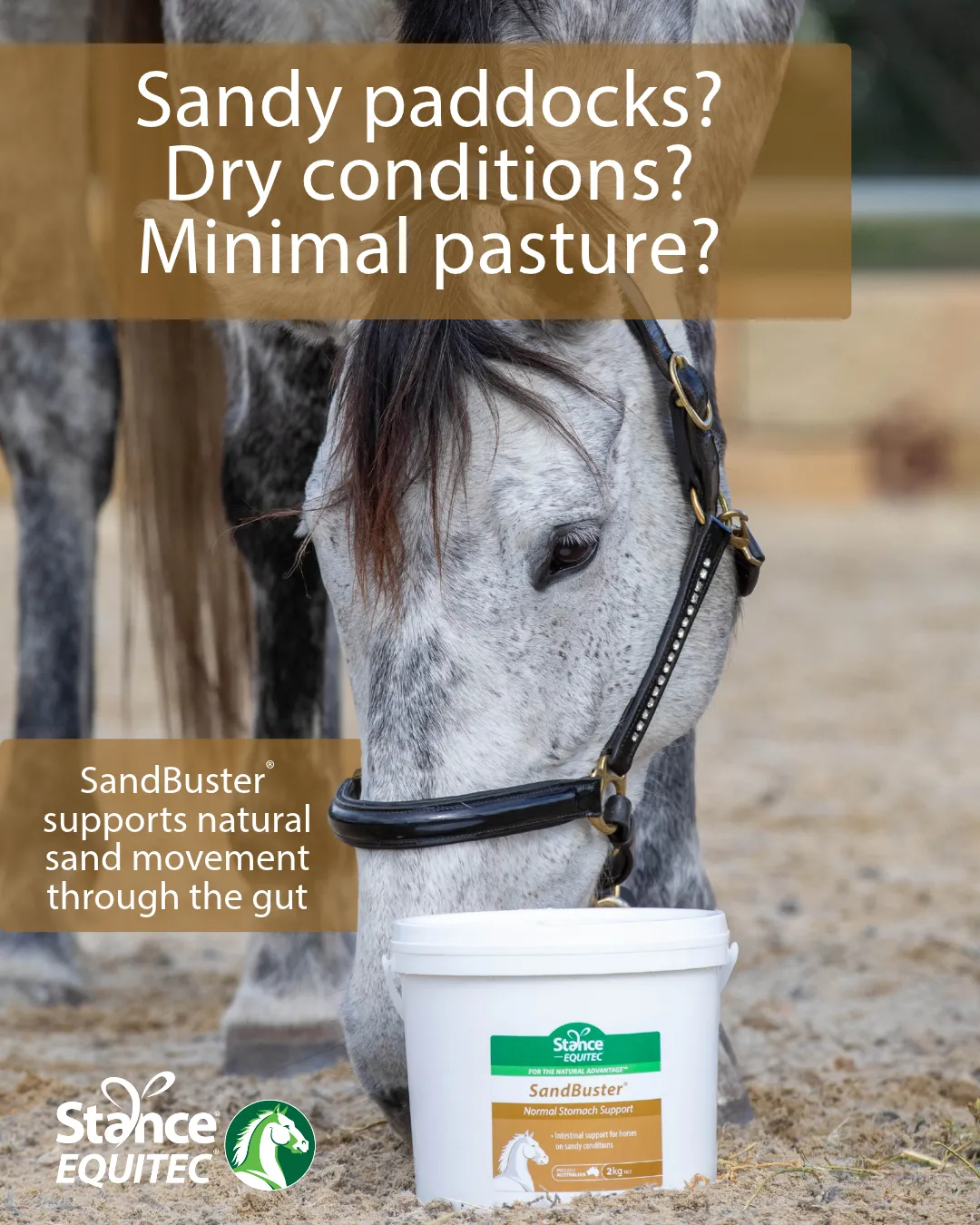
When grass is sparse, horses may graze closer to the ground, increasing the chance of ingesting sand along with their feed. Over time, sand may accumulate in the digestive tract.
What can you do?
How SandBuster® can help
SandBuster® is formulated to support the natural movement of sand through the digestive tract. Its ingredients swell and become gelatinous when wet, supporting natural sand movement and the intestinal lining.
It can form part of a sand-management routine for horses kept or fed in dry, sandy conditions, alongside appropriate feeding practices.
Click here to order SandBuster®
2. Wet and humid weather: Be aware of grasses and weeds
Warm, humid conditions can encourage fungi to grow on certain grasses and weeds, including paspalum, ryegrass, couch grass and some clovers. These fungi can produce mycotoxins, which may also be present in some hay and commercial feeds.
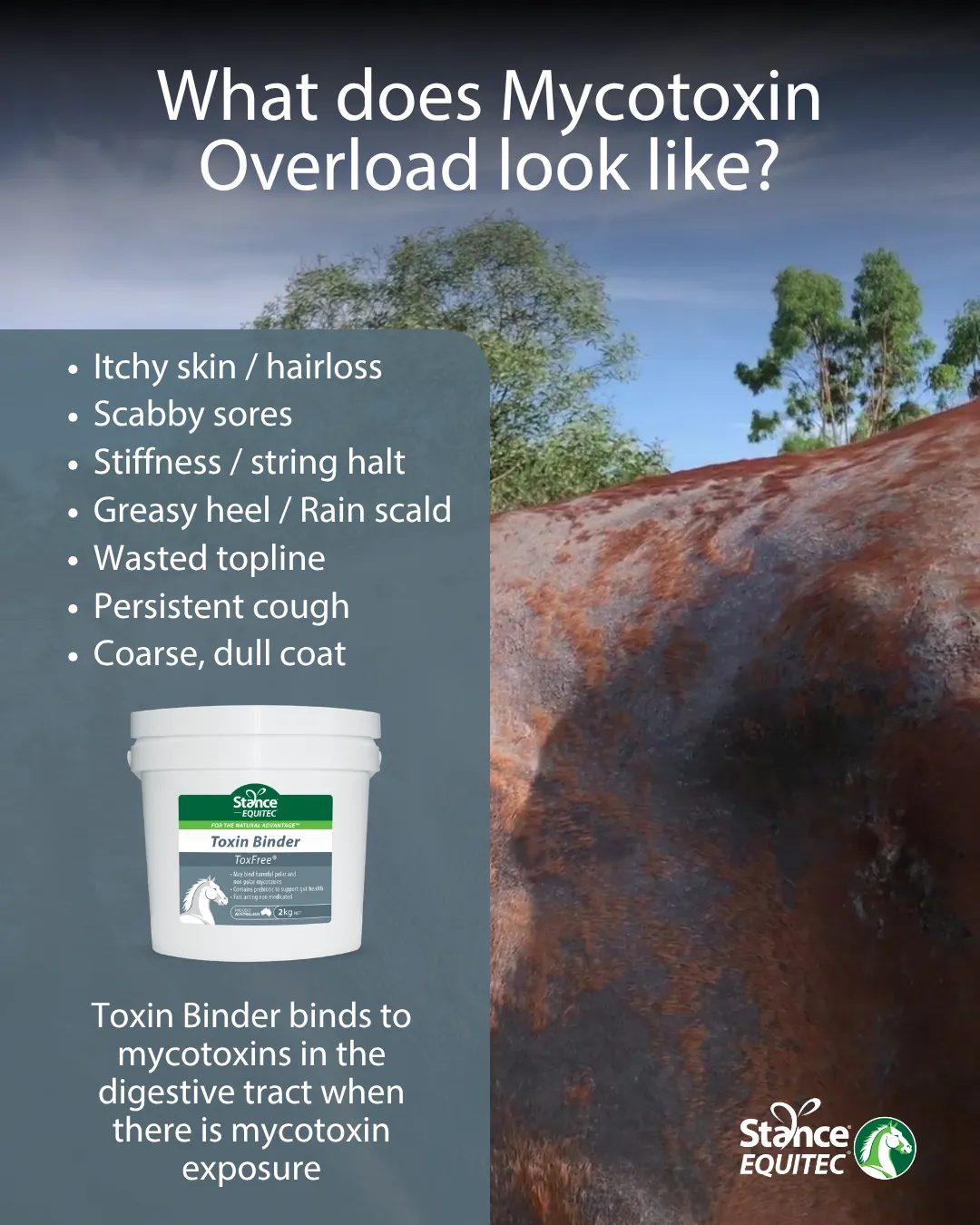
Mycotoxin exposure can be difficult to identify because signs vary between horses and may be subtle or mistaken for other issues. Possible signs include itchy skin, hair loss, scabby sores, stiffness, unusual sweating, a dull coat, persistent cough, unexplained spookiness or changes in behaviour. Some effects may occur without obvious external signs.
What can you do?
ToxFree® Toxin Binder contains specifically selected ingredients that bind to mycotoxins in the horse’s digestive tract during periods of increased mycotoxin exposure. It is fast acting and can form part of a considered feeding program alongside regular paddock monitoring, good pasture management and careful feed selection.
Mycotoxin exposure can be difficult to identify, so seek veterinary advice if your horse shows unexplained changes in health or behaviour.
Click here to order Toxin Binder
3. Gut health: Important in every season
Changes in pasture, forage availability, feeding routines, travel and confinement can all influence a horse's digestive health. Gastric ulcers are one concern, particularly for horses exposed to recognised risk factors such as prolonged periods without forage and stressful management conditions.
Maintaining a consistent feeding routine, providing suitable forage regularly and avoiding unnecessary long periods without feed are important foundations of digestive health.
What does research say about turmeric?
A published study by Charles Sturt University investigated Curcuma xanthorrhiza, a type of turmeric, in 10 horses during periods of confinement and feed restriction. Horses receiving 20g of Curcuma xanthorrhiza powder daily did not experience the same worsening of squamous gastric ulcer severity seen in the control condition. By the end of the study, ulcer severity was significantly greater in the control group.
Read more about the research: Pre-treatment with turmeric reduces the severity of squamous gastric ulceration in feed-restricted horses.
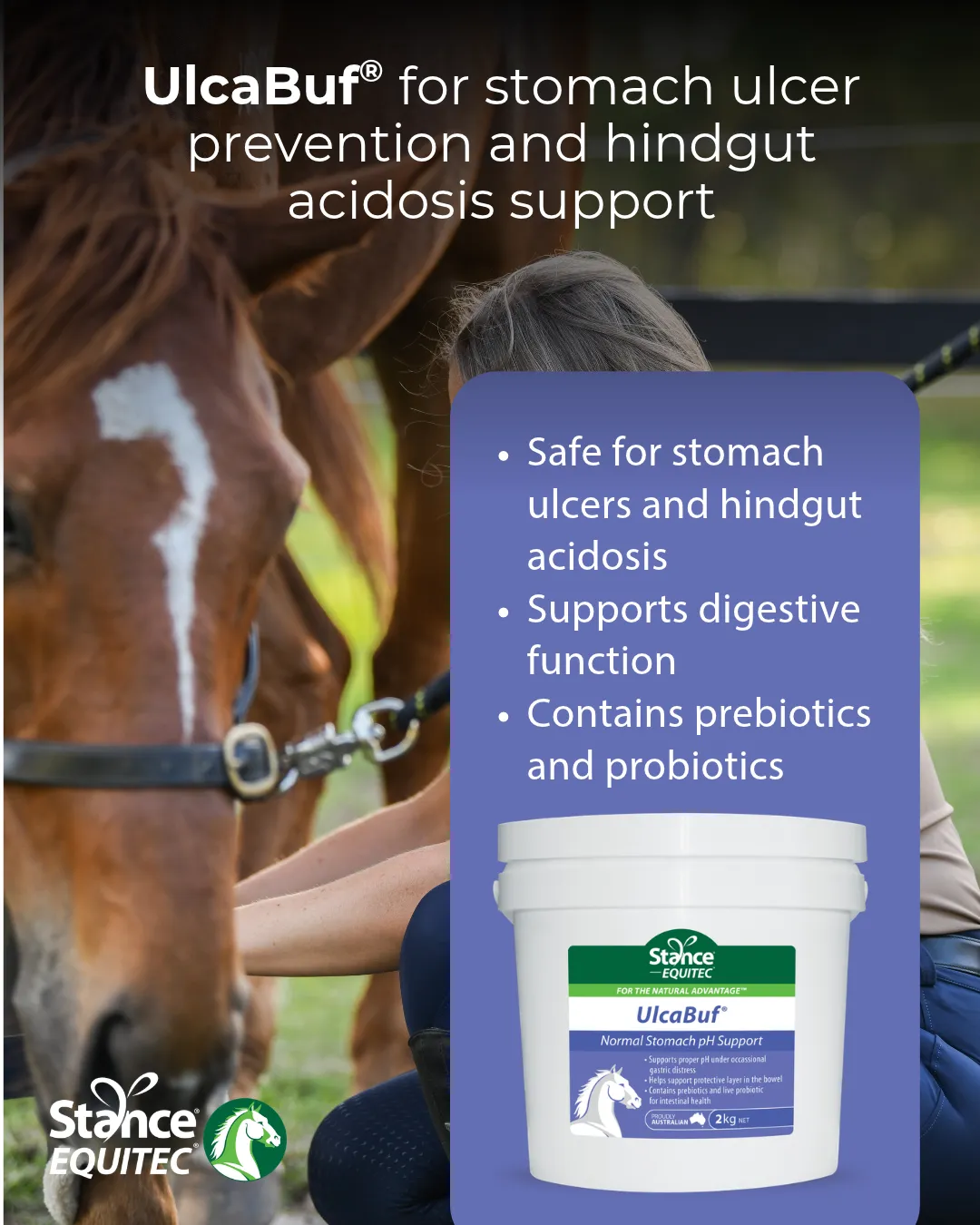
How UlcaBuf® can help
Developed with this research in mind, UlcaBuf® combines Curcuma xanthorrhiza with complementary ingredients, including powdered coconut oil, marine-derived calcium, prebiotic and probiotic ingredients and sodium alginate.
It provides nutritional support for digestive health and can be considered as part of a proactive feeding and management routine.
Click here to order UlcaBuf®
Feed with Confidence, Whatever the Weather
Whether your paddocks are dry and sandy or lush after rain, understanding your horse's environment and feeding routine is an important part of responsible horse ownership. SandBuster® supports sand management, Toxin Binder helps manage the effects of contaminated grass and feed-borne mycotoxins, and UlcaBuf® provides nutritional support for digestive health.
Each has a different role in helping you make informed decisions for your horse.
Every horse has individual needs, and the right feeding program depends on factors such as pasture, forage, workload, condition and health. For more information on digestive health nutrition and to see the full range of Stance Equitec’s nutritional products, visit here
Not sure if your horse's diet is meeting their needs? Stance Equitec's free TruGuide diet analysis can help you review your current feeding program and guide your next steps. Visit TruGuide to get started.

BLACK FRIDAY – TWO PRODUCTS, TWO COMMON PADDOCK PROBLEMS!
Whether your horse is enjoying lush spring pasture or searching for the last blades of grass in a dry paddock, support their digestive health with Stance Equitec.
Shop our Black Friday 20% DISCOUNT now! Starts Friday 27th Nov 2026 Ends 11.59pm AEST Monday 30th Nov 2026
USE CODE: BLACKFRIDAY26